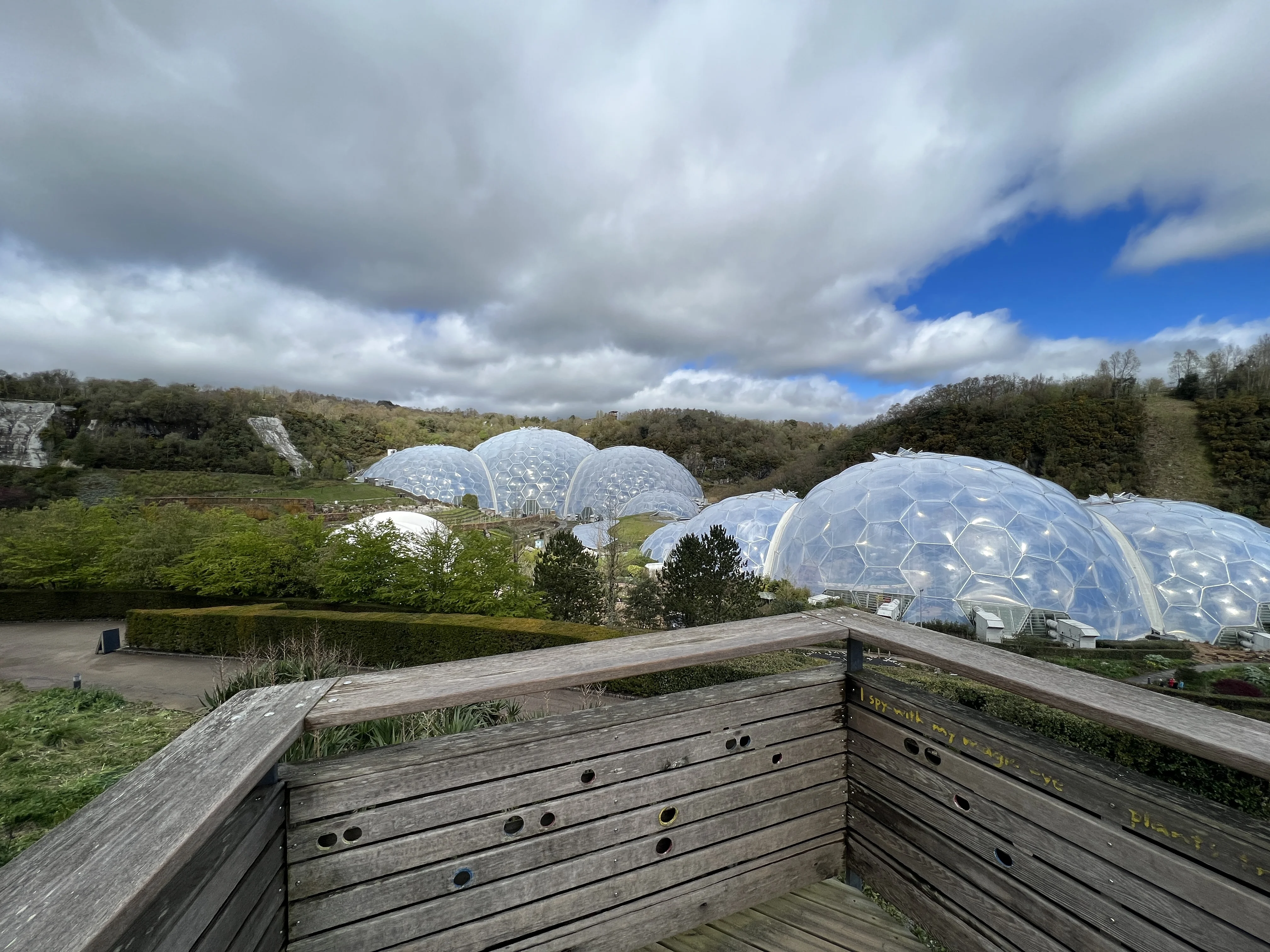
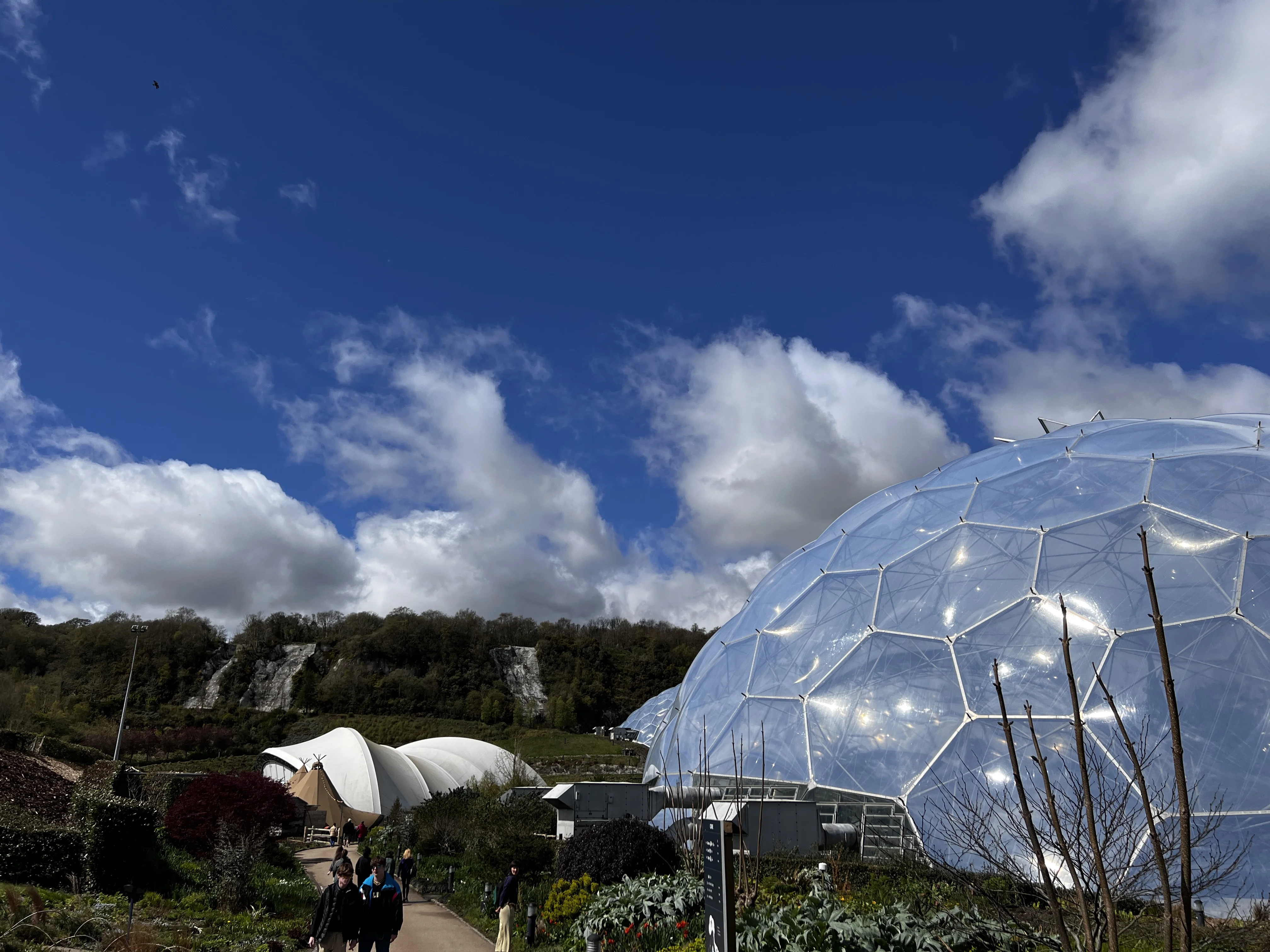
The Eden Project: Where Nature and Innovation Flourish
The Eden Project, an ecological marvel and a testament to human ingenuity and environmental stewardship, has a history as rich and diverse as the plant life it harbors..
The beginning
When my partner (at the time) and I decided to explore The Eden Project, little did we know we'd be stepping into a verdant world that
felt like a cross between a futuristic botanical garden and an eco-warrior's dream. Nestled in a reclaimed china clay
pit in Cornwall, England, this global garden is a sanctuary of sustainability and conservation, housing thousands of
plant species collected from many diverse climates and environments.
As we wandered through the massive Biomes, it felt like we were trekking through the rainforests of South America one
moment and then exploring the fragrant landscapes of Mediterranean regions the next. The Rainforest Biome, a structure
so vast it could house the Tower of London, enveloped us in a humid embrace, with towering trees and cascading waterfalls.
We learned that it's the world's largest indoor rainforest, a fact that hardly surprised us given the sheer scale and
diversity of life thriving under its ethereal dome.
Equally impressive was the Mediterranean Biome, a complete contrast with its dry, temperate climate showcasing olive groves,
grape vines, and bursts of colorful flowers. It was a slice of Mediterranean life, with all its aromatic and visual allure,
recreated with such authenticity that we momentarily forgot we were in Cornwall.
Get educated
What struck us most about The Eden Project wasn't just its botanical wonders but its commitment to environmental education
and sustainability. Solar panels, rainwater harvesting, and a biomass energy facility underscore its ethos of living in
harmony with nature. This place is more than a garden; it's a living laboratory demonstrating the interconnectivity of life
and the importance of conservation.
The Outdoor Gardens were a testament to the adaptability and resilience of plants, featuring sculptures and art installations
that added an extra layer of intrigue to our visit. Each step through Eden was a discovery, unveiling not just the beauty of our
planet's flora but also the innovative ways humanity can preserve it.
Our visit to The Eden Project was an unforgettable journey through ecosystems far and wide, without ever leaving the UK. It was a
reminder of the beauty and fragility of our world—a truly unique experience where nature, science, and art converge. For my partner
and me, it was not just a day out but a poignant journey into the heart of our planet's past, present, and future.
Some interesting facts
The Eden Project, an ecological marvel and a testament to human ingenuity and environmental stewardship, has a
history as rich and diverse as the plant life it harbors. Nestled in a reclaimed china clay pit in Cornwall,
England, its inception was driven by the visionary Tim Smit, who was also instrumental in the restoration of the
Lost Gardens of Heligan. The idea was bold and ambitious: to create a series of interconnected biomes housing plant
species from around the world, thereby highlighting the importance of biodiversity and conservation.
The project broke ground in 1998, with the site's transformation being a monumental task. The pit, scarred from industrial
use, was an unlikely canvas for what would become a global garden. Yet, through the dedication of architects, engineers,
gardeners, and countless others, the Eden Project opened its doors to the public in March 2001.
The construction of the biomes, particularly the Rainforest and Mediterranean Biomes, was an engineering feat. The Rainforest
Biome, the largest indoor rainforest in the world, is supported by a geodesic dome structure that maximizes both space and
light, allowing for a vast array of tropical plants to flourish. The Mediterranean Biome, smaller but no less impressive,
recreates the warm, dry conditions of Mediterranean climates, showcasing the plant and cultural diversity of the region.
From the outset, sustainability has been at the core of the Eden Project's ethos. It employs green technologies, including
rainwater harvesting, energy efficiency, and waste reduction. The site itself is powered by renewable energy, underscoring
its commitment to being a model for environmental sustainability.
Beyond its botanical collections, the Eden Project has evolved into a hub for education, research, and conservation
initiatives. It hosts workshops, school visits, and community events aimed at promoting understanding and action on
ecological issues. Its global outreach programs support conservation work worldwide, emphasizing the project's role not
just in showcasing biodiversity but in actively working to protect it.
The impact of the Eden Project extends beyond its ecological contributions. It has been a catalyst for economic regeneration
in Cornwall, attracting millions of visitors and supporting local businesses and communities. Its success has inspired similar
initiatives globally, highlighting the potential for environmental projects to drive positive change.
As it continues to grow and evolve, the Eden Project stands as a living reminder of what can be achieved when vision,
innovation, and a commitment to the planet come together. It is not just a garden but a gateway to understanding our place
within the natural world and the steps we can take to protect it for future generations.
Top spots in this area
Add a short line here about the places you’d recommend nearby.
You can remove this paragraph if you don’t need it.
The Eden Project Biomes
Best for: immersive global landscapes
Walking into the biomes feels like stepping into different parts of the world in minutes. The heat, the plants, and the scale of it all make it feel genuinely memorable.
The Rainforest Biome
Best for: warmth and wow factor
The moment you enter, the humidity hits you. Towering plants, hanging walkways, and the sound of water make it feel like a proper escape from Cornwall’s cooler air.
The Mediterranean Biome
Best for: relaxed wandering
This area feels calmer and brighter, with olive trees, herbs, and open paths. It is a nice contrast to the rainforest and encourages slow, unhurried exploring.
Outdoor Gardens
Best for: fresh air and seasonal colour
The outdoor spaces change throughout the year, so every visit feels a little different. It is a good place to pause, sit, and take in the scale of the site.
Eden Project Walkways
Best for: views and perspective
Elevated paths give you a chance to see the biomes from above. Looking down over the plants really highlights how carefully designed everything is.
Family Activities at Eden
Best for: visiting with children
There is always something interactive going on, from trails to workshops. It keeps kids engaged without feeling like a theme park.
Food and Cafes at Eden
Best for: relaxed lunch stops
The food areas are spread out, so you can stop when you need to. Sitting with a coffee and looking out over the site is part of the experience.
Seasonal Events at the Eden Project
Best for: repeat visits
Events and installations change through the year, which gives you a reason to come back. It never feels exactly the same twice.
Map & getting around
Here’s roughly where everything sits. Zoom, drag, and poke around to plan your own version of the day.